Are We Connecting or Just Transacting?
In schools, homes, and communities, we often fall into a rhythm of getting things done. We divide chores, assign tasks, manage schedules, and problem-solve logistics. It’s efficient. It works. But sometimes, we miss the subtle shift—from relationships built on connection to ones built mostly on exchange.
Transactional Relationships: Practical but Limiting
A transactional relationship says, “I do this for you, so you do this for me.” It’s not wrong or harmful—it’s how we function in everyday life. Buying coffee, organizing carpool, or assigning class duties all involve clear give-and-take.
But when this becomes our default in parenting, teaching, or leadership, something vital gets lost.
You might recognize a transactional mindset when:
- You’re keeping score (“I helped you yesterday, now it’s your turn.”)
- You feel frustrated when there’s no quick payoff
- You focus more on roles than people
- You pull back when your effort isn’t matched
These moments aren’t about being unkind. They’re about efficiency. But over time, they can quietly erode trust and connection.
I like to think of transactional like how I feel when I’m just a “number”.
Relational Relationships: Rooted in Care
Relational relationships take more time. They ask more of us emotionally. But they build something deeper and more lasting.
Here’s what a relational mindset might look like:
- You check in because you genuinely care, not because it’s expected
- You offer grace when someone messes up
- You focus on who someone is, not just what they do
- You hold boundaries, but with empathy and respect
This doesn’t mean avoiding hard conversations or ignoring needs—it just means you approach them with connection at the center, not control or fairness alone.
I like to think of relational like how I feel when someone makes me feel like a person and not a number.
What This Means for Us
Whether you’re a teacher managing a classroom, a parent navigating big feelings, or a community leader organizing people—it’s worth asking:
Am I building connection, or just completing a transaction?
The more we choose to see people as whole—messy, growing, and worthy of care—the more we create environments where everyone can thrive.
Let’s lead with presence. Let’s build from relationship, not just results.
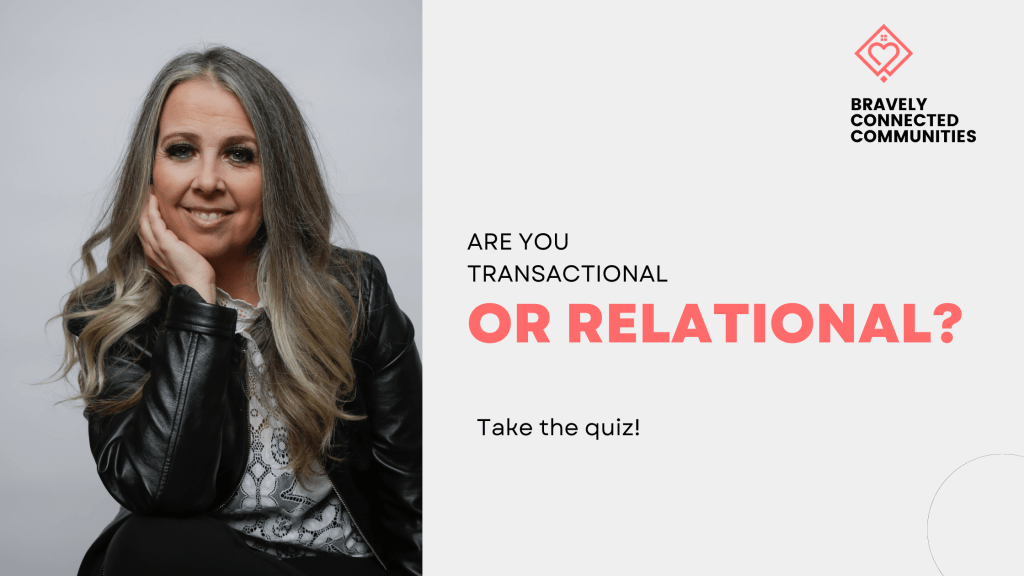
Take the quiz to find out which way you lean!
Quiz: Are You More Transactional or Relational in Your Relationships?
Answer the following questions honestly. Choose the option that best reflects how you typically interact in relationships—whether at work, at home, or in your community.
1. When someone asks for help, your first thought is:
A. Do I have time for this and what do I get in return?
B. How can I be present and supportive, even in a small way?
2. You’re most satisfied in a relationship when:
A. Things are fair, efficient, and expectations are met.
B. There’s mutual understanding, trust, and emotional connection.
3. When someone cancels plans last minute, you usually:
A. Feel frustrated and keep mental tabs on who owes who.
B. Wonder how they’re doing and reach out to check in.
4. How do you approach giving feedback?
A. Direct and to the point—it’s about performance.
B. Supportive and thoughtful—it’s about growth and connection.
5. When you ask someone how they are, you:
A. Hope for a quick “good” so you can move on.
B. Are genuinely curious and willing to listen.
6. In a group or team setting, your focus is on:
A. Getting the job done with as little friction as possible.
B. Building a sense of belonging and shared purpose.
7. If someone lets you down, your instinct is to:
A. Step back from the relationship or mentally “dock points.”
B. Reflect on what might be going on for them and stay open.
8. You see vulnerability in others as:
A. A weakness that can complicate things.
B. A strength that deepens connection.
Scoring:
Give yourself 1 point for each A answer and 2 points for each B answer.
- 8–11 points: You lean more transactional in your relationships. You value efficiency, fairness, and clarity, but may miss opportunities for deeper connection. Consider where a little more presence or empathy might serve you and others well.
- 12–15 points: You have a balanced approach. You likely value both outcomes and connection, navigating relationships with a blend of practicality and care.
- 16+ points: You’re primarily relational in your approach. You lead with empathy, connection, and trust. Just make sure you also have healthy boundaries and don’t overextend.
Want to know how to become more relational?
Want to know how to have healthy boundaries within being relational?
I have a cheatsheet for both! Email me at connie@conniejakab.com to get yours!

 Bravely Connected
Leave a comment