Today, loneliness and isolation are at epidemic levels. In the high schools I visited, students confirmed what I hear everywhere—from teachers, parents, and workplaces: people don’t know how to build friendships anymore. Through my interactive hip-hop social experiments, we explore bravery and anxiety. The results this week were powerful.
Students shared that if they dared to be vulnerable, they risked “social suicide.” This fear reflects a larger cultural issue: while we admire vulnerability from a distance (hello, Brene Brown fans), living it is another story.
Instead of moving toward one another with care, we often retreat into autonomy and self-protection. True connection, though, demands a balance. If we stay too self-focused, we lose empathy. If we lose ourselves in connection, we risk unhealthy people-pleasing.
That’s why, in the coming weeks, I’ll be teaching practical skills to cultivate what I call inner brave belonging—a personal foundation that allows you to connect deeply without losing yourself. Whether you’re a teacher, parent, leader, or student, these tools will help you create environments where people feel alive, supported, and courageous.
But here’s the catch: this culture of belonging must be built by those who already know they belong.
The Problem of External Validation
When my own kids were young and we were facing a mental health crisis, I based my self-worth on how they behaved. If they were doing well, I was a good parent; if they struggled, I felt like a failure. I see the same pattern everywhere: we allow others—our students, our community, even strangers—to dictate our worth.
We need to change that. No one should have that much power over you. If they do, it’s time to put up a “for sale” sign on that mental real estate and reclaim your worth.
My Personal Story: Belonging from Within
Cultivating inner belonging has been a deeply personal journey for me. I’ve spent years learning to separate myself from people-pleasing and emotional chaos.
I’m a bit of an oddball—a 50-year-old hip-hop dancer.n When my boys were little, other new moms were thinking about strollers and coffee dates, I was looking for local hip-hop jams. For years, I struggled to fit in. Other people’s moods could wreck me for months.
One morning, during my quiet time, everything changed. I suddenly knew—deep in my being—that I belong. Not because anyone said so, but because it was true.
I even got a tattoo to remind me: a heart facing outward, symbolizing that belonging isn’t something others create for me. I bring it with me wherever I go.
Now, whether I walk into a room full of strangers, skeptical grade sevens, or an intimidating group of women, I already know: I belong. And because I belong, I can extend my hand to others—even those who have hurt me—with boundaries in place.
The Belonging Bullseye: Protecting Your Inner Circle
Here’s a tool I use—and I recently shared it with a group of girls. Imagine a bullseye, with several rings around it.
- The dot in the center is you.
- The inner circle contains the very few people (often five or fewer) who truly deserve to be close to you. They know your best and worst, and they still have your back.
- Beyond that are acquaintances—classmates, coworkers, neighbors. They’re in your life, but not in your heart.
- Further out are social media “friends”—people who know you a little but aren’t deeply connected.
- The outermost ring is for people who have hurt you, betrayed you, traumatized you, or proven themselves unsafe.
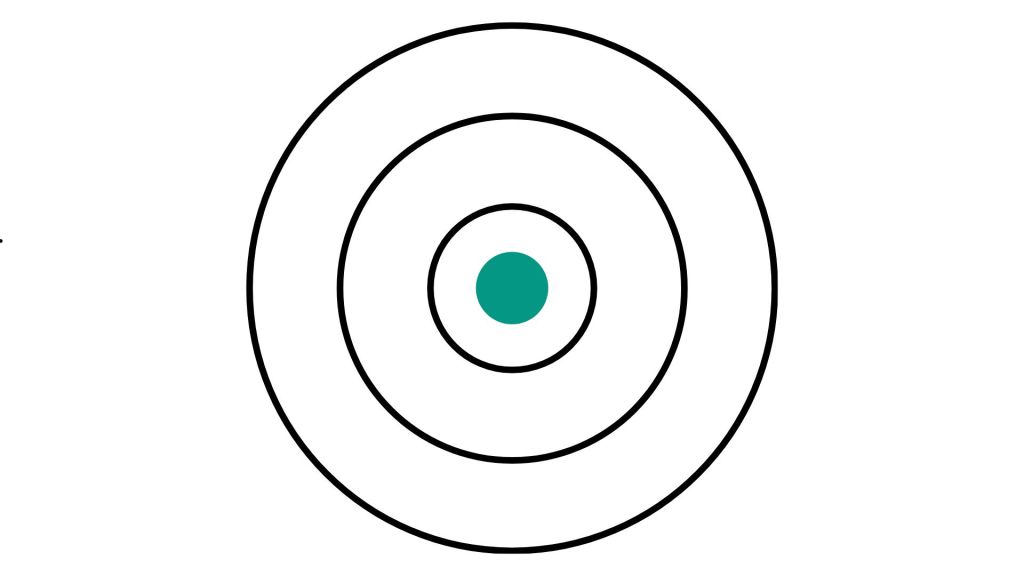
Many people make the mistake of giving too much mental and emotional energy to those who should stay on the outer ring. Instead of pulling them close—or obsessing about their opinions—you simply acknowledge: they belong on the outside. You don’t need to act; you just need to release them.
Managing Boundaries to Protect Your Belonging
When we don’t set proper boundaries, we risk bringing people too close to our inner circle who don’t belong there. Instead of keeping toxic influences at a safe distance, we pull them in, creating chaos not just for ourselves but for others too. In mental health, this is called triangulization—when instead of handling conflict directly, we involve three or four others, or even an entire community.
The very culture we want to build—in our homes, schools, and communities—gets blown up because we don’t know how to deal with conflict between two people. We either avoid setting boundaries altogether or we don’t know how to have healthy conversations, possibly with the help of a mediator. After mediation, it’s okay to move that person to an outer ring of your life.
So, what do you need in order to move someone toxic to the outer ring of your life? Name it. Name it right now. Trust me, they’re going to be fine. They’re probably not even thinking about you. And if they are, that’s their problem to work through, not yours.
What’s happening right now is your right to belong is being stolen by this unresolved conflict. It’s time to reclaim it.
How This Shows Up in Teenagers—and Adults Too
I spent time this week in three high schools, and I saw the same pattern. One student gets into a conflict, and suddenly it’s not just between two people—it’s a whole group chat on Snapchat, with everyone ganging up on one person. That person ends up feeling isolated and not wanting to come to school.
And the truth is, adults are no different. When we don’t manage conflict well, we pull others in, and the cycle of division continues.
Remember: behavior is communication. The behavior we see—getting everyone involved, creating group drama—is actually covering up an underlying emotion: powerlessness. It’s an attempt to feel a sense of control.
The Path Forward: Belonging to Yourself
Friend, I’m writing this because I care about you. I want you to move forward in your life. Here’s the key: identify your inner ring people, and then recognize who needs to be moved to the outer rings. Let go of the mental torture. Release them.
In one powerful conversation with a teenage girl, she said something profound:
“I just need to know that I belong.”
Exactly. It brings us back full circle to where we started—with the tattoo on my wrist that reminds me that I belong. No one can create belonging for you. Not your spouse. Not your best friend. No one.
Belonging must be cultivated inside of you. When it is, you show up differently. You genuinely don’t care what others think—not because you’re defensive, but because you’re grounded.
For me, a lot of that belonging comes from my faith. For you, it might look different. But the point is, you can feel at home in yourself no matter where you are—in a faraway country, walking a lonely road, standing alone in an office—you still belong.
Join the 45-Day Belonging Challenge
That’s what the 45-Day Belonging Challenge is about. I’m giving you 45 tools I’ve personally used to:
- Stand firm in who I am.
- Parent through mental health crises.
- Advocate for my family with schools and mental health professionals.
- Lead in my community without losing myself.
- Build nourishing friendships.
- Stay brave even when it’s hard.
Each day, you’ll receive one simple tool—something to listen to, watch, or reflect on. Here’s what’s included:
- 45 short audios (about seven minutes each).
- Six videos to deepen your learning.
- A journaling PDF to track your growth.
- An eBook if you prefer reading.
We’ll even start with a little quiz to measure your sense of belonging now, and compare it at the end. Imagine, in just 45 days—less than two months—you could walk into any room and truly feel, I belong here.
Even better? You’ll become a creator of belonging for others too.
Are you ready?
If so, email me at Connie@conniejakab.com and let’s get started!
Keep being brave, friends.

 Bravely Connected
Leave a comment