Community is not just where our homes are. It is where our hearts are.
For too long, community has been treated like a strategy: an engagement tactic, a layer added onto programming, or a box to check. But when we pay attention to burnout, loneliness, and quiet disengagement, we begin to see something important. Behavior is communication. And the widespread disengagement we’re witnessing tells us that something is shifting.
As we move into 2026, community is no longer optional. It is becoming core infrastructure for human well-being. Not all communities will survive this shift—not because they are bad, but because not all will be willing or able to adapt. My hope, my dream, is that more communities do make these shifts. That is what Bravely Connected Communities exists to support: sustainable, brave, heart-centered community across neighborhoods, classrooms, workplaces, and gathering spaces of every kind.
When I talk about community, I mean your neighbourhood—but I also mean your classroom if you’re a teacher, your school if you’re a principal, your workplace if you’re a leader, and any space where people regularly gather. The goal is not bigger communities or even more impressive ones. The goal is braver, more sustainable communities.
With that in mind, here are my predictions for the future of community and why they matter.
Prediction One: Community Will Be Measured by Who Stays, Not Who Shows Up
For a long time, we’ve measured community by numbers. How many people attended. How many clicked, liked, shared, or registered. But high attendance followed by quiet disappearance is not success—it’s a warning sign.
People do not leave communities loudly. They leave quietly.
They leave after feeling unseen, emotionally unsafe, overextended, or exhausted for too long. This is true in neighborhoods, faith communities, workplaces, and classrooms. When people stop showing up, there is always a reason. The question is whether we are willing to look for it.
Instead of asking, “Why didn’t people come?” we need to ask deeper questions:
- Did someone feel unseen?
- Are they overwhelmed or overstimulated in their life?
- Did the space feel emotionally unsafe?
- Did participation start to cost more than it gave?
As we move into 2026, healthy communities will be measured by who stays, who returns, and who feels safe enough to invest again. This requires us to shift from impersonal metrics to relational ones. Who did we check in on this week? Who did we call just to ask, “How are you really doing?”
This shift asks more of leaders. We must notice burnout sooner. We must become attuned—using the attune-in and attune-out practices I talk about often—to truly see people. We must design experiences that value continuity over novelty and stewardship over attraction.
The new question is not “How many showed up?” but “Who felt cared for?”
Prediction Two: Belonging Will Become a Core Sustainability Issue
People don’t isolate because they don’t care. They isolate because caring started to cost too much.
Burnout and disengagement are not a lack of commitment. They are signs of relational fatigue. People withdraw when they feel unseen, unsafe, or unvalued—when conversations feel too hard and relationships feel too demanding.
Belonging has often been treated as a “soft” value—something nice if there’s time for it. But after 25 years of studying belonging and resilience, both through data and lived experience, one thing is clear: belonging directly impacts our ability to stay, contribute, and remain resilient.
When people feel they belong, they show up. They contribute honestly. They weather conflict. They stay committed even when things are difficult. When they don’t feel belonging, they disappear—and we often mislabel the reason.
This means leaders can no longer simply invite people to connect or attend. We must design spaces where nervous systems can rest. Belonging is not about proximity or shared space; it is about safety.
One of the realities I am seeing right now is that many people’s nervous systems are overwhelmed. After long periods of isolation, people are coming back into community dysregulated and on edge. Creating spaces where nervous systems can settle will be uncomfortable and slow. Belonging will require us to lean through discomfort, not avoid it.
Prediction Three: Communities Will Become Places of Growth, Not Just Gatherings
Another major shift is that communities built only around social interaction often lack vision, while communities built only around education often lack depth. People don’t just want to gather—they want to understand why they are gathering.
Communities that will thrive are becoming ecosystems. When people come together, they are learning, growing, and being supported in real life. They are engaging in peer support that is mutual, not hierarchical.
True community does not feel prescriptive. It does not say, “Show up and we’ll tell you how to live.” It feels like shared learning: “This is what I’m learning right now—what are you learning?”
People are longing for shared purpose and identity. What do we have in common? What practices do we want to lean into together? Growth happens in relationship, and depth cannot be rushed.
As leaders, this requires slowing down. It requires designing experiences rooted in groundedness, mutuality, and reflection—not just attendance or visible growth. The goal is not more people. The goal is deeper connection.
Prediction Four: Smaller, Place-Based Communities Will Matter More Than Ever
As our world has gone global and digital, many of us are exhausted. Being connected to everyone often means being deeply known by no one. We are tired of being visible but not known, connected but not close.
There is a growing hunger for smaller, micro, place-based communities—not because people want less connection, but because they want truer connection.
Research consistently shows that local connection supports mental health, resilience, and social contribution. When communities become too big, people withdraw. “Go big or go home” became “go home.” Most of us can feel this in our bodies and our lives.
Belonging grows where presence is possible. As leaders, we may feel pressure to scale, produce, and expand. But the future of community is asking us to release that pressure. To think smaller, simpler, and more locally. To value depth over reach.
The future is not bigger communities—it is more bravely connected ones.
Prediction Five: Conflict Competence Will Matter More Than Event Excellence
As communities deepen and people come back together after isolation, conflict is inevitable. Different perspectives, trauma histories, and worldviews will surface. Conflict is not a sign of failure—it is a sign of closeness.
Many communities have learned how to produce excellent events, but few have learned how to navigate conflict well. Avoidance does not create peace. It creates fragility. And fragile communities break under pressure.
The communities that will thrive in 2026 will not be the ones with the best programs. They will be the ones that understand resilience is built through repair. Through staying present when things are uncomfortable. Through regulating our own emotions. Through holding differences without rupturing relationships.
Conflict competence—learning how to stay connected when it’s hard—will become one of the most essential skills for sustainable community.
So what does this ask of us…
What This Asks of Us as Leaders: Building Capacity for Repair
What this asks of us as leaders is that we stop fearing conflict and start building our inner capacity to handle it.
Conflict competence is not about controlling situations or preventing tension. It is about normalization and repair. It is about having something solid inside of us that says, this is how we repair when things fall apart. It means teaching others, explicitly and implicitly, what repair looks like. It means being clear about what we will do when things blow up in front of us—because at some point, they will.
Repair needs to be normal. Honesty needs to be allowed. And care needs to be present even in moments of rupture.
Avoidance is no longer a viable leadership strategy.
We have to face conflict head-on, but we must do it with tenderness, grace, and honesty. That combination matters. Without tenderness, conflict becomes harmful. Without honesty, it becomes superficial. Without grace, it becomes unsafe. Sustainable communities require all three.
From Transactional to Transformational: The Deeper Shift Happening in Community
When you step back and look at these five predictions—or perhaps more accurately, these five dreams—you begin to see a larger shift taking place.
Community is changing.
We are moving from transactional ways of relating to transformational ones. We are moving away from being content-driven, loud, and constantly “out there,” toward being relationship-centered. We are shifting from measuring attendance and visibility to prioritizing belonging and rootedness.
Belonging is the goal.
Being rooted is the goal.
In 2026, the most impactful communities will not be the loudest. They will not be the biggest. They will be the ones that help people move toward wholeness while staying connected.
And that—honestly—sounds beautiful.
A Shared Invitation
These are my predictions. Or maybe they are my hopes.
I would love to know which one stood out to you. If this resonated, share it. If you know someone working in community spaces, education, leadership, or caregiving, and you thought, they need to hear this, please pass it along.
I share these reflections so they can support you in your world. And together, I truly believe these dreams of community can come to pass.
In the meantime, friends—
keep being brave.
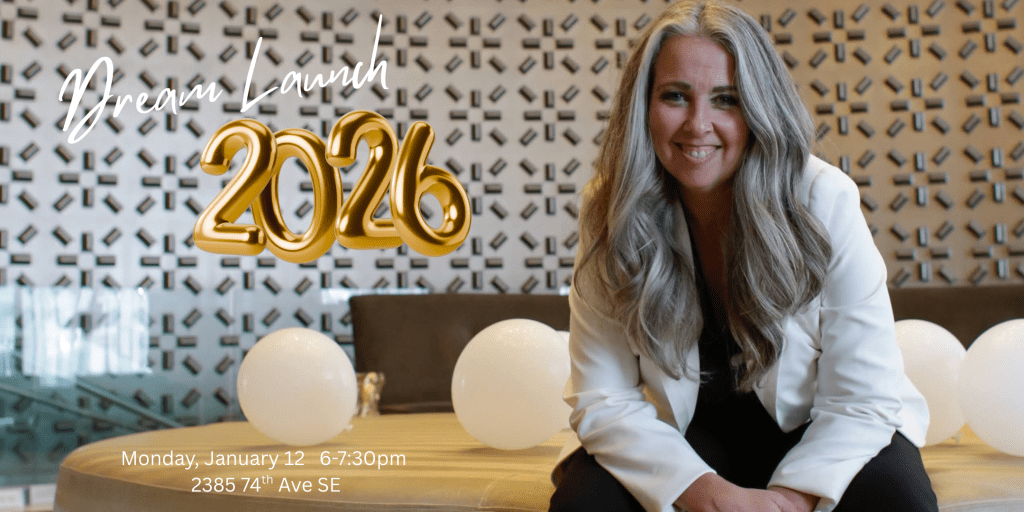
Do I even have a dream anymore?
If you’ve ever asked yourself that question — this evening is for you.
Maybe life has been heavy.
Maybe responsibility, loss, burnout, or survival mode pushed your dreams so far down you’re not sure they’re still there.
Maybe you’ve stopped dreaming not because you didn’t care… but because it felt safer not to hope.
Dream Launch 2026 is a gentle, grounding, and powerful space to help you reconnect with what’s still alive inside you — even if you’re skeptical, unsure, or tired.
This is Day 1 of the Dream Academy, offered freely for anyone who needs clarity before commitment.
This Is For You If…
You don’t know what your dream is anymore (or if you ever had one)
You feel like life has narrowed your options
You’ve been in survival mode for a long time
You’re skeptical of “dream talk” but quietly curious
You sense there might be more — but you can’t see it yet
You want clarity without pressure, hype, or expectation
You don’t need a business idea.
You don’t need a polished vision.
You don’t need confidence.
You just need to show up as you are.
What This Day Is About
Dream Launch is not about pushing you to “dream bigger.”
It’s about helping you answer quieter, deeper questions:
What has life silenced in me?
What barriers shaped what I believe is possible?
What still matters to me — even if I’ve forgotten how to name it?
What would clarity feel like, not overwhelm?
Through guided reflection, gentle teaching, and grounded conversation, you’ll begin to uncover what’s been buried — not broken.
What You’ll Experience
A safe, judgment-free environment
Guided exercises to reconnect with yourself
Language for what you’ve been carrying
Clarity around what’s blocking your sense of possibility
A new way of thinking about dreams — rooted in reality, not pressure
Space to breathe, reflect, and listen inward
No pitching.
No forced sharing.
No pretending you’re fine.
Why We’re Offering This Free
Because too many people opt out of their future before they ever get clarity.
Day 1 of the Dream Academy exists to help you decide:
Is there still a dreamer in me?
Whether you continue into the full Dream Academy or not, this day stands on its own. You’ll leave with insight, language, and a renewed sense of possibility — even if the next step isn’t clear yet.
If You’re Wondering…
“What if I don’t find anything?”
That’s okay. We start with honesty, not answers.
“What if I feel behind?”
You’re not. Life happened. We honor that.
“What if I’m not an entrepreneur?”
Dreams aren’t only businesses. They’re lives that feel aligned.
Come As You Are
You don’t need to believe you have a dream.
You just need to wonder if you might.
Dream Launch 2026 is an invitation — not a demand — to reconnect with what’s possible again.

Reserve your free spot today here.
Spaces are intentionally limited to keep the experience personal and safe.

 Bravely Connected
Leave a comment